MPN
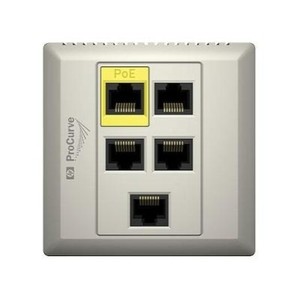
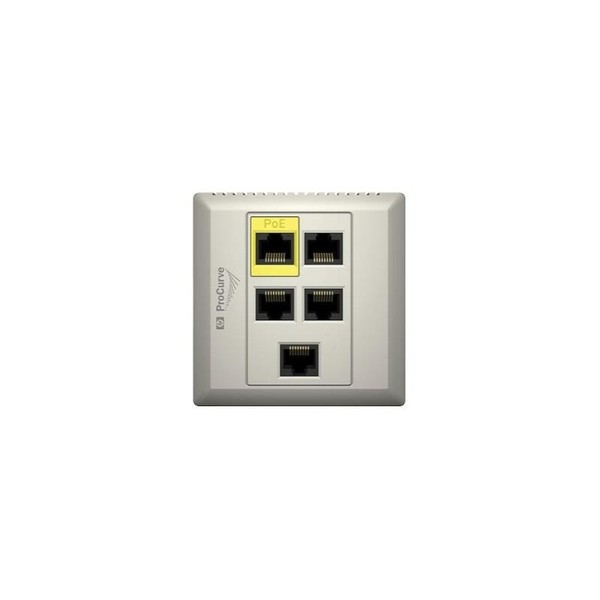
MPN: J9423A
Main features
Type: A wireless access point is a device that is used to pass a connection without wire, thereby allowing users to log on without the drawbacks of a wired network. Wireless bridges are designed to connect multiple networks between them.Wireless access point
WLAN standards: A device supports a number of wireless standards that indicate features available to it, and the standards that the wireless adapter must itself take charge.IEEE 802.11 has
IEEE 802. 11 g/b
IEEE 802.11d
Other features: some devices are equipped with additional features (possible power from the cable Ethernet [PoE], for example), or built-in security features (firewall or virtual networks VPN, for example).PoE (802.3af Power-over-Ethernet)
Other features
Data rates 802 has: data rate supported by the device with this type of connection. A device can support multiple flows of data. 54 Mbps, 48 Mbps, 36 Mbps 24 Mbps, 18 Mbps, 12 Mbps, 9 Mbps, 6 Mbps
802 .11B data rates: data rate supported by the device with this type of connection. A device can support multiple flows of data. 11Mbps, 5.5 Mbps, 2 Mbps, 1 Mbps
802.11 G data rates: data rate supported by the device with this type of connection. A device can support multiple flows of data. 54 Mbps, 48 Mbps, 36 Mbps 24 Mbps, 28 Mbps, 12 Mbps, 9 Mbps, 6 Mbps, 5.5 Mbps, 2 Mbps, 1 Mbps
Operating frequency: standards 802 .11b and 802.11 g use the 2.4 GHz signal frequency, which allows to achieve data rates high with longer spans. The WLAN 2.4 GHz are sometimes subject to interference from cordless phones, microwaves and other WLAN. The 802.11 standard uses for its part the 5 GHz signal frequency, which also provide a spectrum much more broad, is relatively little subject to interference. 2, 4 GHz
5 GHz
Modulation: There are many standards of modulation. The most commonly used are the following:
DSSS
The standard DSSS (Direct - Sequence Spread Spectrum) is a technology that combines the data signal to a technical called higher data bits sequence of "chipping". This system ensures increased resistance to noise and better data integrity.
OFDM
The standard OFDM (Orthogonal Frequency Division Multiplexing) is to transmit digital data by radio wave by dividing a signal radio in several sous-signaux. Thesesignals are transmitted simultaneously at different frequencies. This modulation technique has the advantage of reducing the noise diaphoniques.
CCK
CCK (Complementary Code Keying) uses a 64 code words to 8-bit sequences to encode data. It thus gets speeds of 5.5 and 11 MB/s in the band of 2.4 GHz laOFDM
CCK
QPSK
BPSK
DBPSK
DQPSK
16QAM
64QAM
DSSS
802 .11B/g channels: 802.11 b/g: 11 (North America), 13 (Europe), 14 (Japan), 802.11 has: 8 (North America), 4 (Japan)
Number of ports 10/100: 5
Console port: port network standard used by the device to connect.Ethernet RJ-45
Dimension
Width: 7.1 cm
Depth: 7.6 cm
Height: 2.8 cm
Weight: 0.15 kg
Various
UPC: 884420554271
Product no.: 89703901
No comment was published at the time.
Only registered users can post comments.








 Twitter
 Facebook



 By purchasing this product you can earn up to 23 loyalty point that you can convert to a good of 4,60 €.
Your loyalty points.
By purchasing this product you can earn up to 23 loyalty point that you can convert to a good of 4,60 €.
Your loyalty points.